1
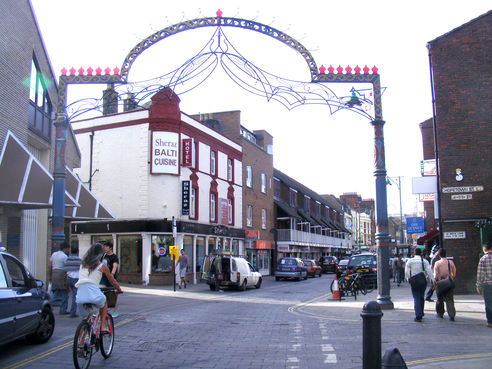
Turn left out of Shoreditch High Street Station past the ‘love locks’ on the fence and turn right along Bethnal Green Road. Cross Sclater Street and continue along the main road, passing Richmix (A), a huge cultural centre, on the left. At the traffic lights turn right along Brick Lane (B). Walk along this semi-pedestrianised street enjoying its eclectic ranges of cafes, bar, clubs and art galleries. Some shops, such as the bagel shops, are a reminder of Jewish immigration into this part of London in 1880 and 1890s, escaping from persecution in Russia.
2
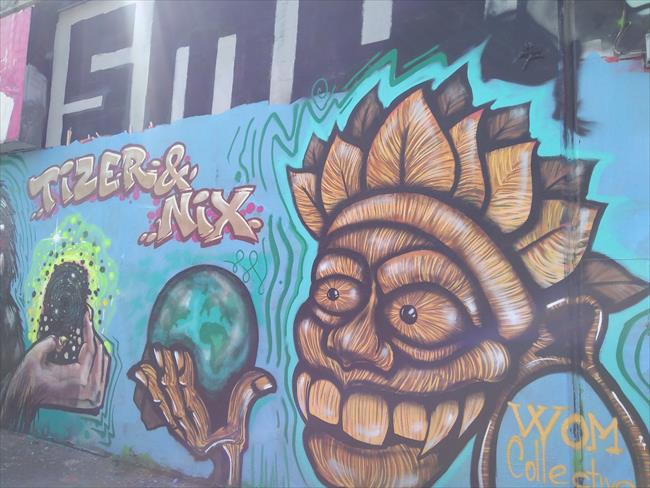
Continue under a concrete railway bridge and look out for the chimney bearing the name Truman over buildings on the left. Immediately after the bridge go left a short way along Pedley Street to enjoy the graffiti along the railway arches at the edge of the park (C) before returning and continuing along Brick Lane. Note how street names are also written in Bengali and many lamp posts are painted green and red, the colours of the Bangladeshi flag. The trees on the right and the Truman chimney mark parts of the old Truman’s brewery (D) which covered ten acres around Brick Lane. Just before the overhead bridge linking two of the brewery buildings, notice Dray Walk, with lively cafes with lots of outside seating and esoteric clothes shops, which was called Black Eagle Street when Truman’s brewery started as the Black Eagle Brewery around 1666. Walk past the indoor Vintage and Upmarket markets and turn right along Hanbury Street. The blue plaque on Hanbury Hall on the left gives an idea of how multicultural the history of the area has been.
3
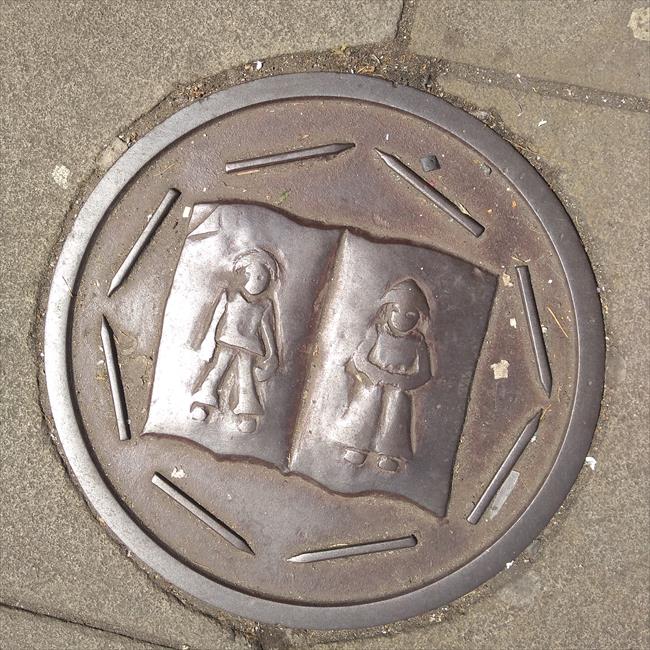
Turn left along Wilkes Street with fine 18th century renovated houses then turn left again when you reach Princelet Street (E). The houses here mainly date from the 1720s and were built for French Huguenot master silk weavers with mansard garrets with wide windows to maximise the light for the weavers. At 17 Princelet Street a blue plaque marks the birthplace of Miriam Moses, the first woman mayor of Stepney. Next door at 19 Princelet Street is an unrestored silk weaver's home, whose shabby frontage conceals a rare surviving synagogue built over its garden and also houses the Museum of immigration and Diversity telling the stories of successive waves of newcomers - Huguenots, Irish, Jews, Bengali and Somali people among others -who have shaped this area. The museum can only be visited by appointment. Reaching the end of Princelet Street, turn right to continue along Brick Lane. On the next corner there is a tall illuminated minaret outside London Jamme Masjid (Great Mosque). The building was originally a Huguenot chapel but has been used as a synagogue, Methodist church and Protestant church as the population needs changed. Continue along the rest of Brick Lane. Here you can find some of the best Bangladeshi food in London in an area re-named Banglatown. Christ Church Primary School is on the right, built in 1874. Look out for the bronze roundel in the pavement outside, one of several dotted around the Spitalfields area. Cross Fashion Street and Wentworth Street. Brick Lane becomes Osborn Street and then meets Whitechapel High Street.
4
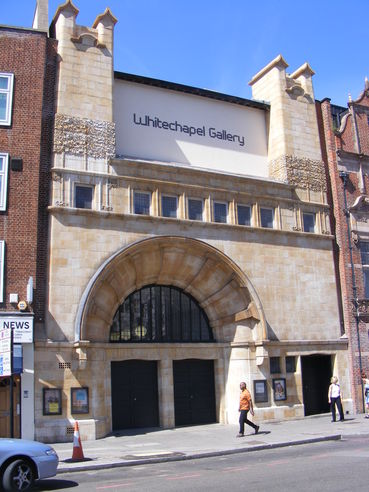
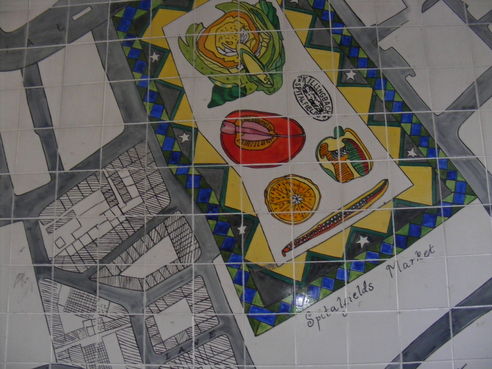
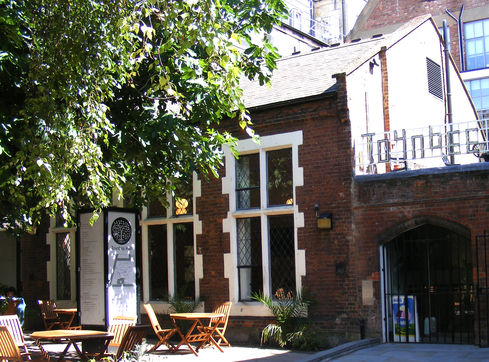
Turn right on to Whitechapel High Street. After the entrance to Aldgate East tube station stands Whitechapel Art Gallery (F), a Grade II* listed building which exhibits modern and contemporary art and has premiered international artists such as Pablo Picasso, Jackson Pollock and Mark Rothko. Look right in the arch leading to Gunthorpe Street for a tiled information plaque and map. The pub next to it, the White Hart, claims to have Jack the Ripper connections. Continue to and turn right at the lights to walk along Commercial Street, passing Toynbee Hall (a famous community centre, established in 1884) which has an advice centre on the right. At the next lights, cross left to enter Petticoat Lane Market along Wentworth Street with its many clothing stalls. The market is busiest on Sundays when stalls spread into the surrounding streets.
5
Turn right into Bell Lane and then go first right along Brune Street. On your left you’ll pass the Jewish Soup Kitchen, founded in 1854 to help Jews fleeing from pogroms, who were arriving in London with no money and no employment. Turn left along Toynbee Street to reach Commercial Street. Continue along the main road. On the right is Christ Church Spitalfields (G), a Grade 1 listed building designed by Nicholas Hawksmoor between 1714 and 1729. The porch with its semi-circular pediment and Tuscan columns was a later addition, intended to add support to the tower. There are gardens and seats here. Cross Brushfield Street, pass a couple of shops and enter Old Spitalfields Market on the left. The market stalls and independent shops offer everything from jewel encrusted vintage boots to art deco sofas to rare vinyl records. Walk through the market and head left to emerge on Brushfield Street through Punchinello Gate opposite the London Fruit Exchange and London Wool Exchange. Turn right and pass an entrance to the newer section of Spitalfields Market. Note the shops along the left side of the road, some of which retain very old signs and frontages.
6
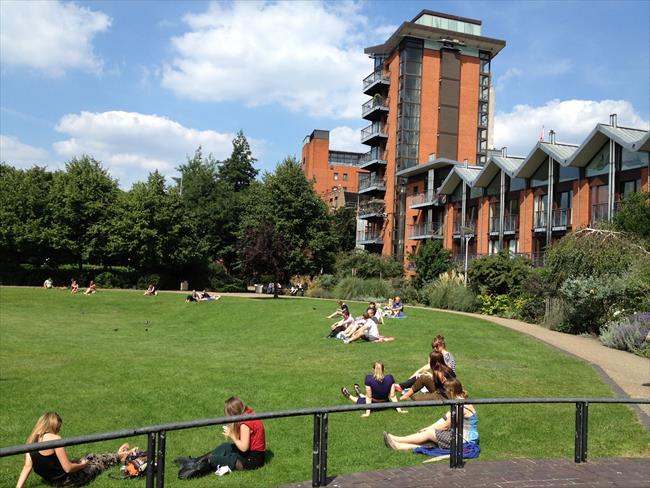
When you reach the white goat perched on packing cases, turn right into an open paved area, Bishop's Square, with small gardens, seats, water features and interesting sculptures. Walk ahead between the office buildings. Outside the entrance to Allen and Overy, the solicitors, at No 1, steps take you down to excavations of the crypt of the chapel of St Mary Magdelene and St Edmund the Bishop built in about 1320. Ascending back up the steps, continue in the same direction out of the square. Carry straight on past some fine Georgian houses. Turn left into Folgate Street. At number 18 is Dennis Severs’ house (H) where the artist tried to live in the same way as the original eighteenth century owners. The house can be visited by appointment and visitors are encouraged to imagine the house is still occupied by an invisible family of Huguenot silk weavers.
7
Continue to the intersection with the main road. Turn right and cross the road at the crossing and immediately in front of you is a statue of a griffin with the body of a lion and the head and wings of eagle. These statues mark the boundaries of the City of London. Enter Worship Street by walking under large green girders then turn right in front of the first office block and across the square past a blue sculpture. Cross a small car park and go to the right of the two stripy buildings to reach Plough Yard where you turn right to the main road. Go left to the lights and stop to look left down Great Eastern Street to see old underground train carriages perched on the top of a building on the right. You go straight on under the railway bridge, cross Holywell Lane and then cross Shoreditch High Street at the lights and continue along the right hand pavement of the main road. Just before St Leonard's Church (I), turn right along Calvert Avenue. The Church, stands on possibly the oldest site of continuous Christian worship in England. This church was built and opened in 1740. It still has a tracker organ from 1756. Some of Shakespeare's actors are buried here, as is James Burbage, the first man to build a theatre in England. The church is mentioned in the line "When I grow rich", say the bells of Shoreditch" from the nursery rhyme Oranges and Lemons.
8
Pass a silvery metallic coffee stall that replaces Syd’s Original Coffee Stall, from 1919, which is now in the Museum of London and also some interesting little shops as you walk towards an elevated band stand at the end of Calvert Avenue in the middle of Arnold Circus. Turn left into Arnold Circus. Walk around the circus passing Virginia School and crossing Hocker Street, Palissy Street and Rochelle Street before turning left into Club Row. Cross Old Nichol Street and Redchurch Street. Go right on Bethnal Green Road. Cross at the lights and continue over Sclater Street to return to the station on your left.