

Summary

A walk round Greenwich with spectacular views of the London, via historic buildings including the former Royal Observatory and the National Maritime Museum
Difficulty:
Easy
Distance:
4.2 miles (6.8 km)
Walking time:
02h 00m
Type:
Circular

Start location

Island Gardens Station E14 3HT

lat: 51.4878857

lon: -0.0098111

Map

Elevation

Route

1 of 0

Getting there

Island Gardens Station is on the Docklands Light Railway for more information look on the tfl.gov.uk/ site.  

Waypoints

1

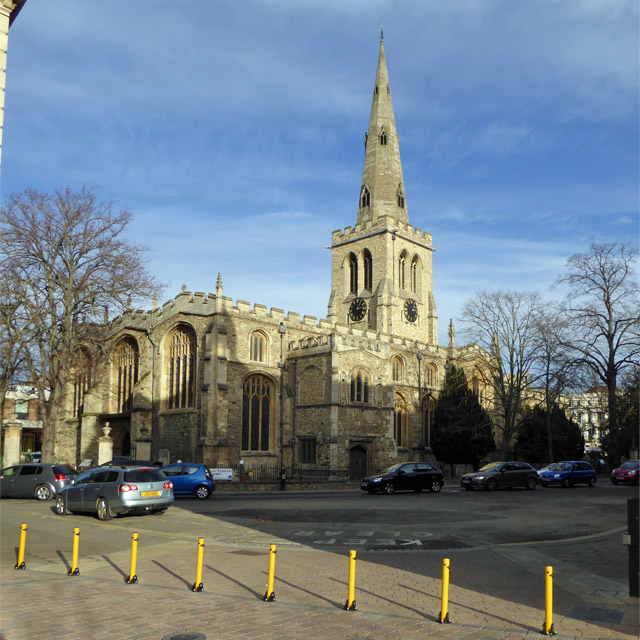
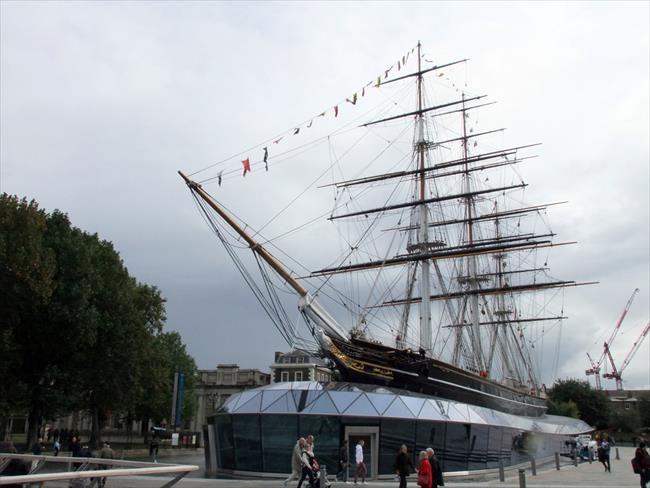
Leave Island Gardens Station, follow sign for the foot tunnel across the road. Stop by the tunnel entrance in Island Gardens to admire the wonderful view of Greenwich on opposite bank of the River. Cross the River using the foot tunnel (A). As you come out of the tunnel, the Cutty Sark (B) is straight ahead. Maintain direction past the Gipsy Moth pub. You can see St Alfege's Church (C) ahead. At the main road turn left, cross over to reach Greenwich Market on the right. (A) Tunnel was completed in 1902 for dockers who lived south of the river but worked in the India Docks on the Isle of Dogs behind you on the north side. 1,215 feet long and 50 feet it is tiled some 200,000 white glazed tiles.(B) Cutty Sark, one of the last tea clippers to be built and one of the fastest, was built in 1869 for China Tea Trade but made its name importing wool from Australia. The opening of the Suez Canal (also in 1869) meant that steamships enjoyed a much shorter route to China, so Cutty Sark spent only a few years on the tea trade before turning to the trade in wool from Australia, (C) St Alfrege's Church. Alfrege was Archbishop of Canterbury brought to Greenwich by Danish invaders and murdered on site of church in 1012. Henry VIII was baptised in the Church. Present Church designed by Nicholas Hawksmoor and completed in 1718. General Wolfe (1727-1759), who was killed at Quebec was buried in the church. In 1930 a statue of him was erected in Greenwich.

2

Walk through the market. Just before the end turn right down Turnpike Lane past the Coach and Horses towards St Alfrege's Church. At the far end turn left and cross over Nelson Road and continue up with the church across the road on your right. Turn left into Stockwell Street (by Cafe Rouge) which becomes Crooms Hill. Walk up the hill past Greenwich Theatre and a terrace of houses (D). Continue up the steep hill with Greenwich Park on the right (D) These houses were built in 1702 by John Roan, Yeoman of His Majesty's Harriers. The Houses were to generate an income to educate poor children from East Greenwich until the age of 15. The owners still pay an annual subscription of £1.34 to the John Roan Secondary School in Maze Hill. Top two houses converted to Fan Museum. (Currently free entry for seniors on Tuesdays!)

3

At the Our Ladye Star of the Sea church fork right up a cobbled path on the other side of the green. St Ursula's Convent School is on the right. Turn left along a gravel road leading away from the school to reach a tarmac road. Cross over to a large house. Turn right along an avenue of lime trees by the park wall to reach the Ranger's House. Continue along the park wall.

4

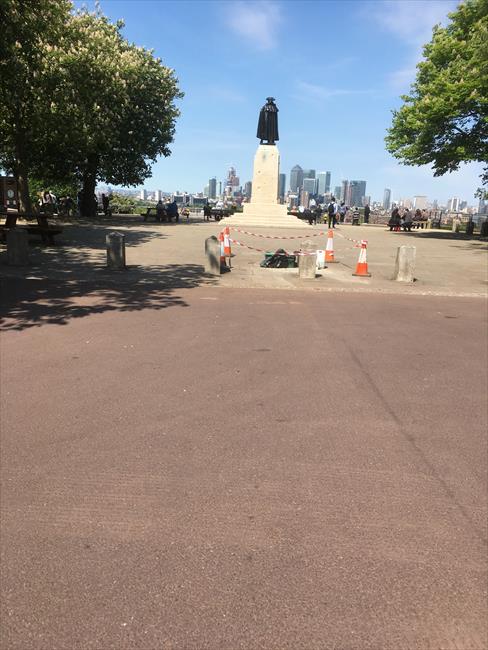
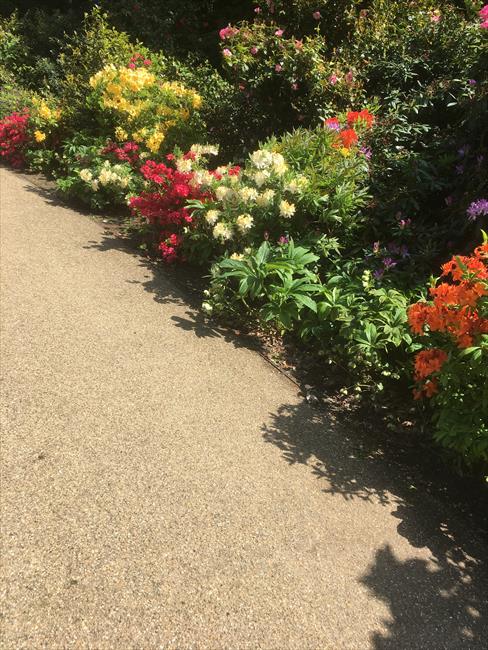
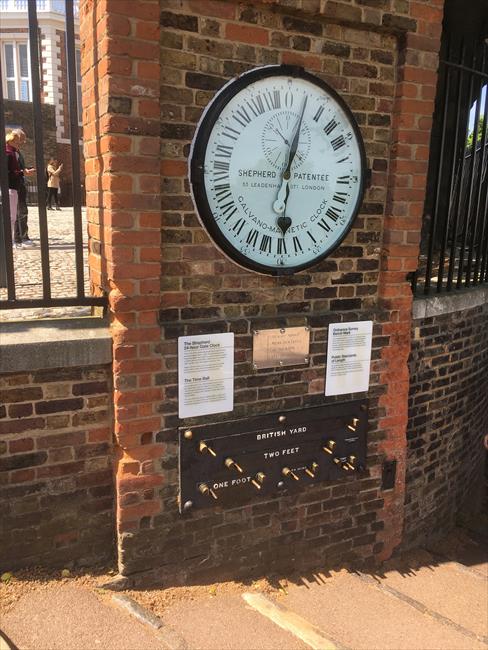
At the end turn left along Charlton Way for a short distance. Go through the small iron gate in the park wall. Turn right and walk to reach and go through a small gate. Follow path through to toilets. Go right out of the park, cross over road and continue through gate opposite into the Flower Garden. At the fork go left and then right and follow path round the lake on the left. Go across the top of the lake then right at the T-junction. Follow this round to the left to a gate on to Bower Avenue. Turn right and at junction take first left, passing the bandstand on the left, and walk to Central Avenue. At the mini roundabout turn right aiming for statue of General Wolfe. On the left is the Old Royal Observatory (E) (E) The National Observatory was built in 1675 by Charles II for John Flamsteed (1646-1719), the first Astronomer Royal who lived in Flamsteed House in Greenwich. Commissioned by Charles II for finding out the longitude of places to aid navigation and astronomy. The meridian line runs through the courtyard. The majority of the world's navigation charts were based on the Greenwich Meridian. Greenwich Mean Time became international standard in 1884. The Royal Observatory's telescopes are now on La Palma in the Canary Islands.

5

With back to the river, take first left before the coffee stall and follow along the edge of the escarpment to a gate out of the park, ignoring any paths off and passing the remains of Queen Elizabeth’s Oak on the left. Through the gate you can see Vanbrugh Castle (F) across the road but turn left inside the park and follow the path down to the bottom gate. Turn right then left and continue down past Maze Hill Station and across Trafalgar Road until you reach Old Woolwich Road. Turn right and Follow this round until you meet Hadrian Street where you turn left. At the end turn left again into Pelton Road and walk down to join the Thames Path. (F) House built by and for Sir John Vanburgh in 1720. He was appointed architect to Greenwich Hospital after Wren. Now divided into flats.

6

Turn left and continue past the Old Harbour Master's Office and along Ballast Quay. Continue on path which narrows and then widens on the quay in front of the electricity generating station and crosses the meridian line. Continue to Trinity Hospital (G) and then on to Crane Street. Turn right round corner of Trafalgar Tavern and then left along the terrace in front of the Old Royal Naval College (H) (accessible up steps from Thames Path). Further along the path passes the pier. Go to foot tunnel and retrace your steps back to the start. (G) Trinity Hospital is an almhouse for retired Greenwich men. Originally built in 1613 by Henry Howard, Earl of Northampton it was rebuilt in 1812 in Gothic style. It was one of three Trinity almshouses founded in the last year of his life, the others being in Clun, Shropshire and Shotesham, Norfolk(H) The college was established in buildings designed by Sir Christopher Wren and built between 1696 and 1712, and intended to serve as the Greenwich Hospital, a home for disabled sailors. This closed in 1869, when the pensioners were transferred to other places, leaving the buildings available for use by the Royal Naval College and the University of Greenwich. The site of the former hospital had once been occupied by the medieval Palace of Placentia, or "Palace at Greenwich", begun by Humphrey, Duke of Gloucester, in 1428. If you don’t want to walk the tunnel again, go left past the Cutty Sark and look for the entrance to the DLR on the right. Cutty Sark for Maritime Greenwich station is one stop away from Island Gardens station.

Problem with this route?

If you encounter a problem on this walk, please let us know by emailing volunteersupport@ramblers.zendesk.com. If the issue is with a public path or access please also contact the local highways authority directly, or find out more about solving problems on public paths on our website.

Join the Ramblers and enjoy

  • unlimited free access to 50,000 Ramblers group walks
  • a library jam-packed with thousands of tried-and-tested routes
  • a welcome pack teeming with top tips plus our Walk magazine
  • exclusive discounts from our partners
  • knowing your support is opening up more places to walk and helping more people discover the joy of walking
Sharing

Join the Ramblers and enjoy

  • unlimited free access to 50,000 Ramblers group walks
  • a library jam-packed with thousands of tried-and-tested routes
  • a welcome pack teeming with top tips plus our Walk magazine
  • exclusive discounts from our partners
  • knowing your support is opening up more places to walk and helping more people discover the joy of walking