

Sue's story: How walking shaped my life, and helped others too
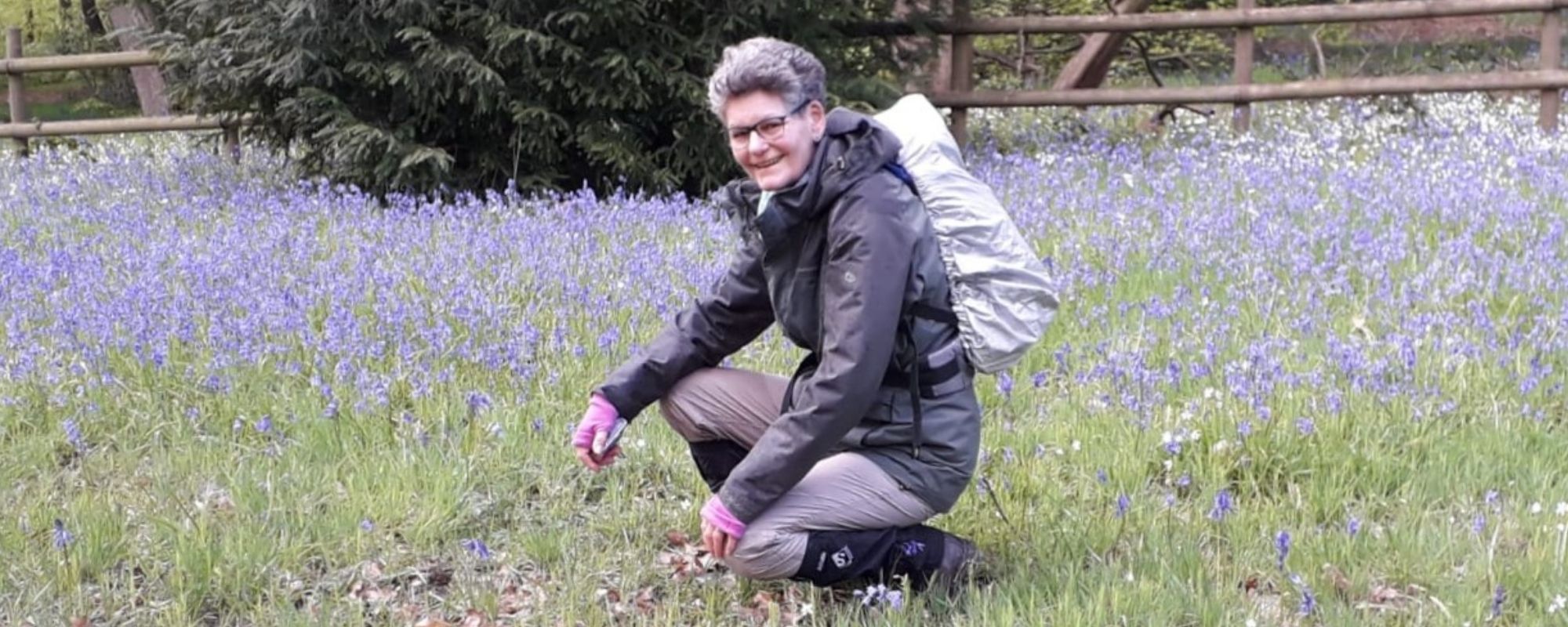
Sue’s journey as a volunteer walk leader shows how walking brings people together, builds confidence and creates stronger, healthier communities.
Walking has always been part of my life
I grew up on a farm in Staffordshire and moved to Sheffield after university. I’ve lived in the same house here for 50 years now and walking has always been part of my life.
I have three children and five grandchildren, and most of them enjoy walking. My mum is 96 years old and still goes out for a daily walk. She might not go as far these days, but she’s still getting out there and really enjoying it. If I’m still doing that when I’m 96, I’ll be very happy!
These days I enjoy between seven and eleven walks each week. By 31 March 2025, I’d taken part in over 2,500 walks and I’d led quite a lot of them too!
My background in health research sparked my interest in health walks
Before I retired, I worked as a reproductive endocrinologist and then moved into medical research, looking at hormone replacement therapy, the menopause and osteoporosis.
Through my work, I became convinced that walking must be good for bone health, especially in relation to osteoporosis. That sparked my interest in health walks, and in 2003 I got involved with the Walking for Health [now Ramblers Wellbeing Walks].
I was lucky enough to get a role developing and delivering health walks in south-west Sheffield. I set up walks at 13 different locations, and most of them are still going today.
When my husband died, walking and volunteering helped me more than I can say
After nine years in that role, I retired and had four years of what I’d call a “normal” retirement.
With over 100 volunteers and hundreds of walkers, the health walks were still going strong, and nobody wanted them to stop – but they needed someone to coordinate it all. As that had been my paid job before, it was suggested that perhaps I could come back and do it as a volunteer – which I did.
At the time, my husband had been diagnosed with cancer, although we didn’t realise how little time he had left. When Richard passed away, taking on the coordinator role gave me something to focus on. It was a bit of a lifesaver. Next year, I’ll have completed 10 years as the volunteer coordinator.
Next year, I’ll have completed 10 years as the volunteer coordinator
We had over 100 volunteers and hundreds and hundreds of walkers and nobody wanted it to stop. The only thing missing was someone to coordinate it all. As that had been my paid job before, it was suggested that perhaps I could come back and do it as a volunteer.
That was in 2016. At the time, my husband had been diagnosed with cancer, although we didn’t realise how little time he had left. When Richard passed away, taking on the coordinator role gave me something to focus on. It was a bit of a lifesaver. Next year, I’ll have completed 10 years as the volunteer coordinator.
I get huge pleasure from seeing other people enjoying themselves.
Normally, I’m out on our Wellbeing Walks four days a week.
Once a month I join the Friday walks to catch up with the team, but on the other Fridays I go out with friends and do what I call a “proper walk”, which is usually six to eight miles in Derbyshire.
Walking just makes me happy. Being out in the fresh air, hearing the birds, looking at the scenery, and enjoying the flora and fauna. One of the chaps I walk with is a real bird enthusiast, so we often look out for birds together, and many of us enjoy identifying flowers too.
One of my favourite walks is along the Great Ridge in the Peak District, where you’re up high looking over Edale on one side and Castleton on the other. It’s absolutely lovely. Another real favourite is Lathkill Dale.
If I’m honest, what I get out of organising health walks is entirely selfish. I get huge pleasure from seeing other people enjoying themselves. Just last week, a gentleman brought his camera along and was taking photos of flowers. When he realised I knew their names, it gave him so much joy. Every walk I go on, people come back smiling.
Over the years, I’ve seen just how much walking can benefit people
Some experiences really stand out. One woman who joined our walks was struggling with alcoholism. After a while, she asked if she could train as a walk leader. I explained that she could train, but she wouldn’t be able to lead a walk if she’d been drinking. She went away to think about it, then came back and said she wanted to go ahead. She completed the training and became a walk leader.
What’s stayed with me is that she said I was the only person who had ever believed in her or trusted her. Everyone else had said no because she was an addict. It seemed like such a simple thing to do, but it empowered her enormously. That was really lovely.
Another woman joined us after her doctor suggested she find something social to help with her depression. As we walked, we talked. She told me how long she’d waited for counselling and therapy, and that she was thinking about training as a therapist herself. She became a walk leader, which boosted her self-esteem and confidence, and she went on to qualify as a therapist and help others.
We also have a refugee who has trained as a walk leader. Leading walks has made a huge difference to him. He used to be very shy and retiring, but it’s given him confidence, self-esteem and a sense of belonging. Experiences like these are incredibly uplifting.
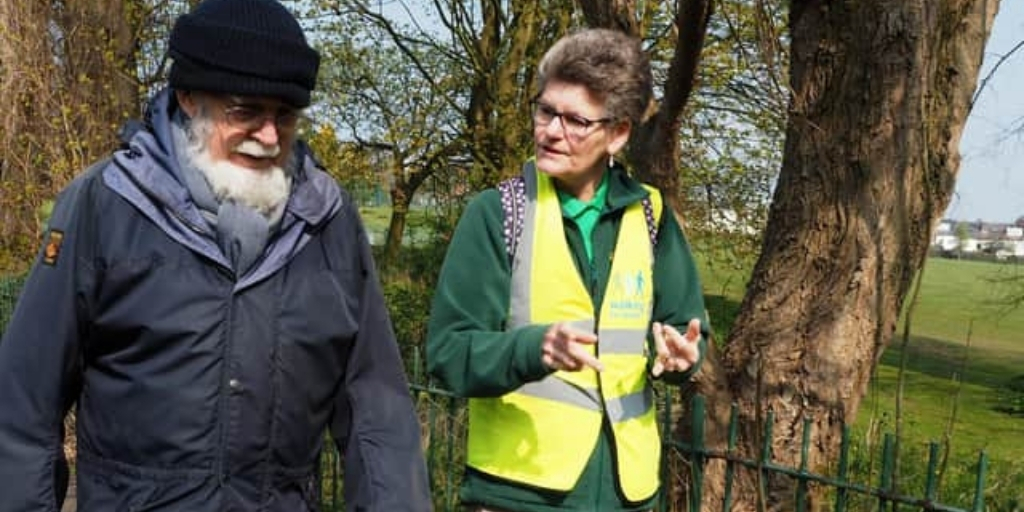
It’s a real privilege to be part of that journey with people
Sometimes people just need a bit of gentle encouragement to become walk leaders, because they don’t believe they have the skills.
Often, I’ll ask them to put on an orange jacket and walk at the back of the group, just to make sure everyone’s safe. After they’ve done that for a few months, I might suggest doing the training, then walking in the middle.
Eventually, many of them find themselves at the front. That’s a technique I learnt through Ramblers training, and it works brilliantly.
Walking has given me joy, purpose and connection and I’ve seen it do the same for so many others. That’s why I keep doing it.
Ramblers Wellbeing Walks
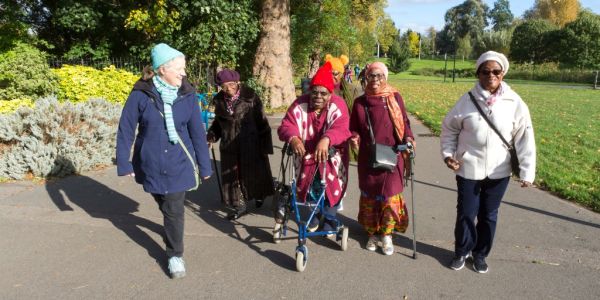
Better wellbeing is just a step away
Ramblers Wellbeing Walks are free, short walks that take place all across England. They’re designed to help you take the first step towards better health, wellbeing and happiness – and with hundreds of walks happening every week, you’re sure to find one right on your doorstep.
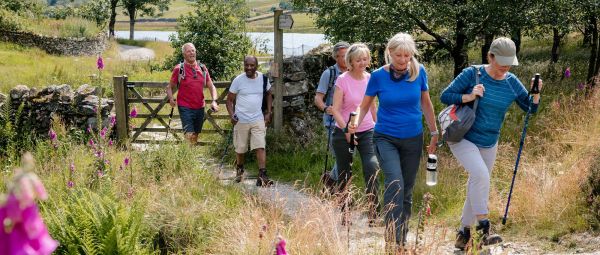
How walking can boost your health
Discover how walking can reward with huge health benefits, including a boost in mood! It’s an easy, accessible and enjoyable way to reduce the risks of heart disease, Type 2 diabetes, dementia, stroke and cancers. Walking is simple, free and one of the most straightforward ways to get more active, lose weight and become healthier.
Discover more
Features
Our latest stories, views and opinions on an abundance of themes and topics related to the world of walking.
.png?itok=jaDz2wmi)
How walking helped my mental health
Gina tells how walking with others has helped her feel like herself again and why she encourages those with mental health struggles to join a walking group.
Walk leadership
Whether you are a walk leader for Ramblers, Ramblers Wellbeing Walks, one of our affiliated groups or an entirely different walking group, the information here will give you some tips and ideas wherever you are on your walk leader journey.